
Cargo Theft Prevention: Protecting India’s Logistics Supply Chain in the Digital Era
Cargo theft is one of the most persistent and costly challenges facing the logistics industry today. As supply chains expand and transportation networks become more complex, the movement of high-value goods across highways, warehouses, and distribution centers creates opportunities for criminal activity.
In India, where road transport carries nearly 65–70% of total freight, trucks travel thousands of kilometres every day. Electronics, pharmaceuticals, consumer goods, and industrial equipment move continuously across the country. This scale of movement creates vulnerabilities that organized theft groups are increasingly exploiting.
For logistics companies, cargo theft is not just a financial problem. It disrupts delivery schedules, damages customer trust, and introduces operational uncertainty across the supply chain.
Preventing cargo theft therefore requires more than traditional security measures. It requires a combination of technology, operational discipline, and real-time monitoring systems.
Understanding the True Cost of Cargo Theft
When a shipment is stolen, the obvious loss is the value of the goods. But the real cost often extends far beyond that initial number.
A single theft incident can trigger:
- Insurance claims and increased premiums
- Delayed deliveries and customer dissatisfaction
- Contract penalties from enterprise clients
- Operational investigations and administrative overhead
- Loss of brand reputation
For companies managing hundreds or thousands of shipments each month, repeated incidents can quietly erode profitability.
Many logistics firms initially treat cargo theft as isolated events. In reality, theft patterns often reveal systemic vulnerabilities in route planning, container security, or monitoring systems. Understanding these vulnerabilities is the first step toward preventing them.
Why Cargo Theft Happens
Cargo theft typically occurs when criminals identify predictable weaknesses in transportation processes.
Some of the most common vulnerabilities include long-distance routes with minimal monitoring, isolated parking areas, and containers secured only with mechanical locks.
Criminal groups often spend time observing logistics operations. They study delivery schedules, common stop locations, and warehouse procedures. Once they identify patterns, they exploit them.
Common theft scenarios include:
- Hijacking trucks during rest stops
- Tampering with container doors while the vehicle is parked
- Breaking container locks during overnight stops
- Collusion with insiders who leak shipment information
These incidents can occur quickly, often within minutes, leaving little time for manual intervention.
Limitations of Traditional Security Measures
Historically, cargo security relied on physical locks, seals, and driver vigilance. While these measures remain important, they are no longer sufficient in modern logistics environments.
Mechanical locks can be broken or replaced without immediate detection. Plastic seals can be cut and replaced with similar ones. Drivers may not notice tampering until reaching the destination.
Even when companies install CCTV cameras in warehouses, these systems typically do not monitor cargo while it is moving across highways.
The fundamental limitation is simple: traditional security methods provide evidence after a problem occurs, not real-time prevention.
To effectively reduce cargo theft, logistics companies must adopt technologies that provide continuous monitoring and instant alerts.
The Role of Technology in Cargo Theft Prevention
Technology has transformed many industries, and logistics security is no exception.
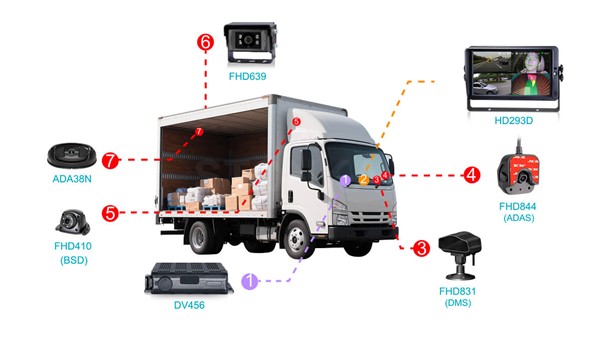
Modern cargo protection systems use Internet of Things (IoT) devices, cloud platforms, and data analytics to create intelligent monitoring networks.
IoT devices are small sensors equipped with communication capabilities. When installed on cargo containers or transport equipment, they can collect and transmit data continuously.
These systems can monitor several key parameters, including container door status, vehicle location, and unexpected movement patterns.
When unusual activity occurs, alerts are sent instantly to fleet managers or security teams.
This capability fundamentally changes the security equation. Instead of discovering theft hours later, companies can detect suspicious activity immediately.
Real-Time Monitoring: A Game Changer
One of the most powerful benefits of modern security technology is real-time visibility.
With connected monitoring devices, logistics operators can observe cargo activity while the vehicle is in transit.
For example, if a container door opens outside an approved delivery location, the monitoring system can generate an alert within seconds.
Fleet managers can then contact the driver, verify the situation, and take appropriate action.
This rapid response capability often prevents theft before criminals can remove goods from the container.
In effect, technology creates a digital watchdog that travels with every shipment.
Geofencing and Route Monitoring
Another powerful tool in cargo theft prevention is geofencing.
A geofence is a virtual boundary defined within a digital map. Logistics operators can set approved zones for container access or vehicle stops.
If a truck enters an unauthorized location or stops for an unusually long time, the system can trigger alerts.
This approach helps detect suspicious behavior patterns that might indicate attempted theft.
For example, if a vehicle deviates from its planned route late at night, the monitoring platform can notify fleet supervisors instantly.
Such early warnings allow companies to investigate potential issues before they escalate.
Strengthening Operational Discipline
Technology alone cannot eliminate cargo theft. It must be supported by strong operational practices.
Logistics companies should establish standardized security protocols for drivers and warehouse staff.
These protocols may include:
- Pre-departure container inspection
- Secure parking guidelines during long routes
- Verification procedures for loading and unloading
- Regular driver training on security awareness
When technology and operational discipline work together, the overall security posture improves significantly.
Drivers become the first line of defense, while monitoring systems provide continuous oversight.
Building Trust with Customers
For enterprise clients, cargo security is a critical concern. Manufacturers, retailers, and e-commerce companies depend on logistics partners to transport valuable goods safely.
When theft incidents occur, the impact can ripple across the entire supply chain.
Implementing advanced cargo monitoring systems helps logistics companies demonstrate reliability and professionalism.
Clients gain confidence knowing that shipments are being monitored continuously and that security incidents can be detected quickly.
In competitive logistics markets, this trust can become a powerful differentiator.
The Future of Cargo Security
As digital technologies continue to evolve, cargo protection systems will become even more sophisticated.
Future solutions may integrate artificial intelligence to analyze transportation data and identify suspicious patterns automatically.
Predictive analytics could detect emerging risks before incidents occur, allowing logistics companies to adjust routes or schedules proactively.
Additionally, integration with broader supply chain platforms may provide end-to-end visibility across manufacturing, transportation, and delivery processes.
In this emerging ecosystem, cargo containers will no longer be passive boxes moving across highways. They will become intelligent assets that communicate continuously with logistics platforms.
Moving Toward Smarter Supply Chains
Cargo theft prevention is ultimately part of a larger transformation occurring in the logistics industry.
Supply chains are becoming more connected, more data-driven, and more transparent.
Companies that invest in modern monitoring technologies today position themselves to operate more secure and efficient logistics networks in the future.
By combining IoT technology, real-time monitoring, and disciplined operational practices, logistics providers can significantly reduce cargo theft risks.
More importantly, they can build stronger relationships with customers who rely on secure and reliable transportation services.
In an industry where trust and reliability define success, smarter cargo security is no longer just an operational upgrade—it is a strategic advantage.